Nine days of a changed diet, plus a few hours of garba every night. Your body bears the brunt of the Navratri festivities and one of the most important things to take care of is hydration. Hydration during Navratri fasting is not given enough attention because signs of low fluid levels manifest as ailments related to the vrat itself: headaches, fatigue, lightheadedness, and a sudden crash as the dandiya begins. Here's what you need to know about staying hydrated during Navratri without disrupting your fast.
Why Navratri fasting causes dehydration even when water is allowed
Water is permitted, so why would you be dehydrated? It is true that the water content in food contributes largely to our daily intake. Items such as dal, roti, vegetables, chaas, and curries are high in water content and a large part of it is lost when you change your diet patterns during the vrat. Even a plate of sabudana and a few fruits cannot compensate for the loss.
The usual vrat plate also leans salty and fried. Sendha namak, fried potatoes, makhana leave a person thirsty without being hydrated. Tea and coffee, which many people keep sipping through the day, act as mild diuretics in large amounts.
Then there are electrolytes. Sodium and potassium help the body hold on to water and keep muscles working normally. When meals shrink and variety drops, those minerals can run low, and plain water alone may not feel like enough.
Garba nights raise the stakes
Two hours of garba is an intense dance session that often takes place in hot, humid surroundings and sweaty clothes. Not only are you losing water through sweat, you're also losing salts and minerals, increasing the risk of dehydration.
Timing makes it worse. Many people fast all day, eat lightly in the evening and head straight to the venue. By the time the music peaks, fluid reserves are already low. This is where garba night health tips matter: fluids are needed before, during and after dancing, not only once thirst arrives. Thirst is a late signal.
Dehydration symptoms during fasting to watch for
Early signs are easy to mistake for hunger. Dehydration symptoms during fasting commonly include:
-
Dry mouth, dry lips or a sticky throat
-
Dark yellow urine, or passing urine less often
-
Afternoon headaches
-
Dizziness on standing up
-
Unusual tiredness
-
Muscle cramps, especially after dancing
-
Constipation
If you are experiencing light-headedness or a rapid heartbeat along with these symptoms, you need to sit down and have some electrolyte-rich fluids. If the symptoms persist, you should consult a doctor.
How much water to drink while fasting
As a rule of thumb, the average adult needs to consume 2-3L of fluids in a day. However, this can vary. The following tips will assist you in determining how much water to drink while fasting
-
Start the morning with a glass of water before tea or coffee
-
Keep a bottle in sight and sip every half hour
-
Check urine colour: pale straw is on track, dark yellow means drink up
-
Add extra fluids on garba days instead of replacing the usual intake
Steady sipping works better than gulping.
Best drinks for Navratri fasting
Water is the base, but variety helps both taste and mineral balance.
-
Coconut water. Coconut water benefits for fasting include providing potassium and a touch of sweetness to counter the saltiness of vrat food. It's best to have this in the morning or afternoon.
-
Chaas or buttermilk. Chaas or buttermilk is a cooling drink that's light on the stomach and allowed during the vrat. It's a good source of sodium if you add some sendha namak and roasted jeera. Avoid sweetened or flavored versions.
-
Nimbu pani with sendha namak. Lemon, rock salt and a little jaggery or sugar, if the fast allows, bring back some minerals lost in sweat.
-
Infused water. Cucumber, mint or lemon slices make plain water easier to keep drinking.
-
An isotonic drink for garba evenings. This is where a purpose-made option earns its place.
Where an isotonic drink fits in
Homemade drinks cover the day well. However, garba is different, because it is closer to a sports session than a stroll, and the body is losing fluid and salts faster than a glass of chaas can replace them. That is the gap an isotonic drink is designed for.
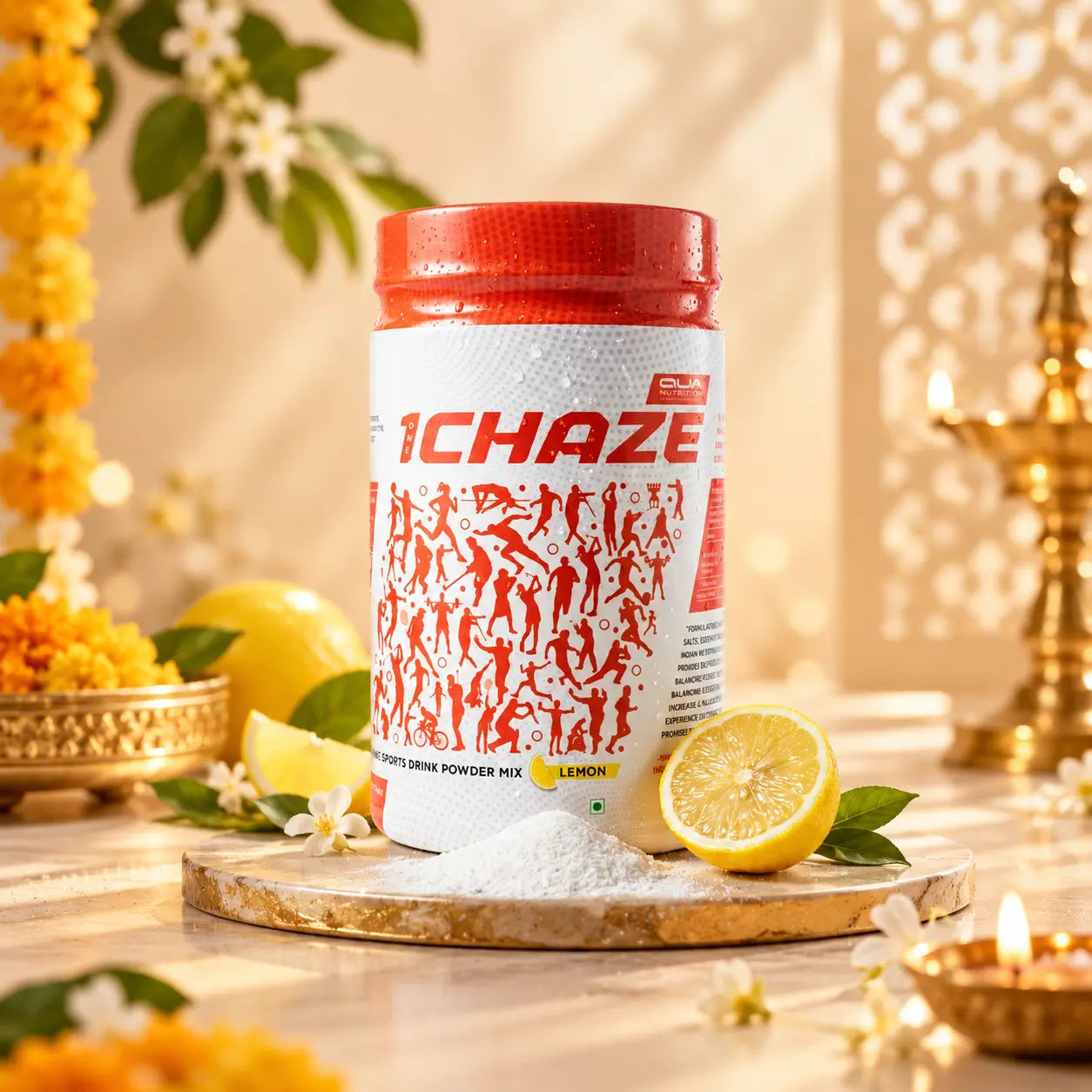
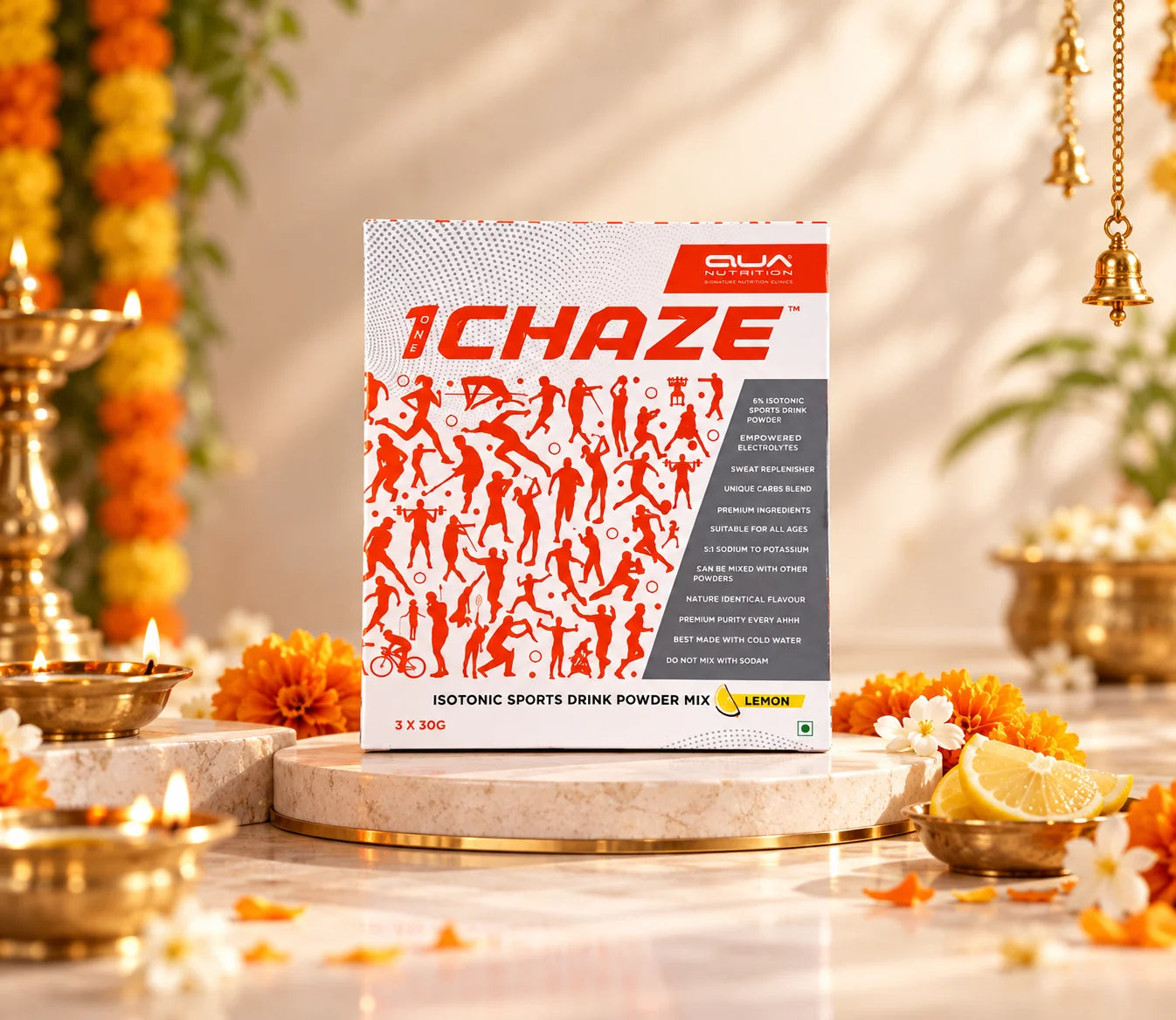
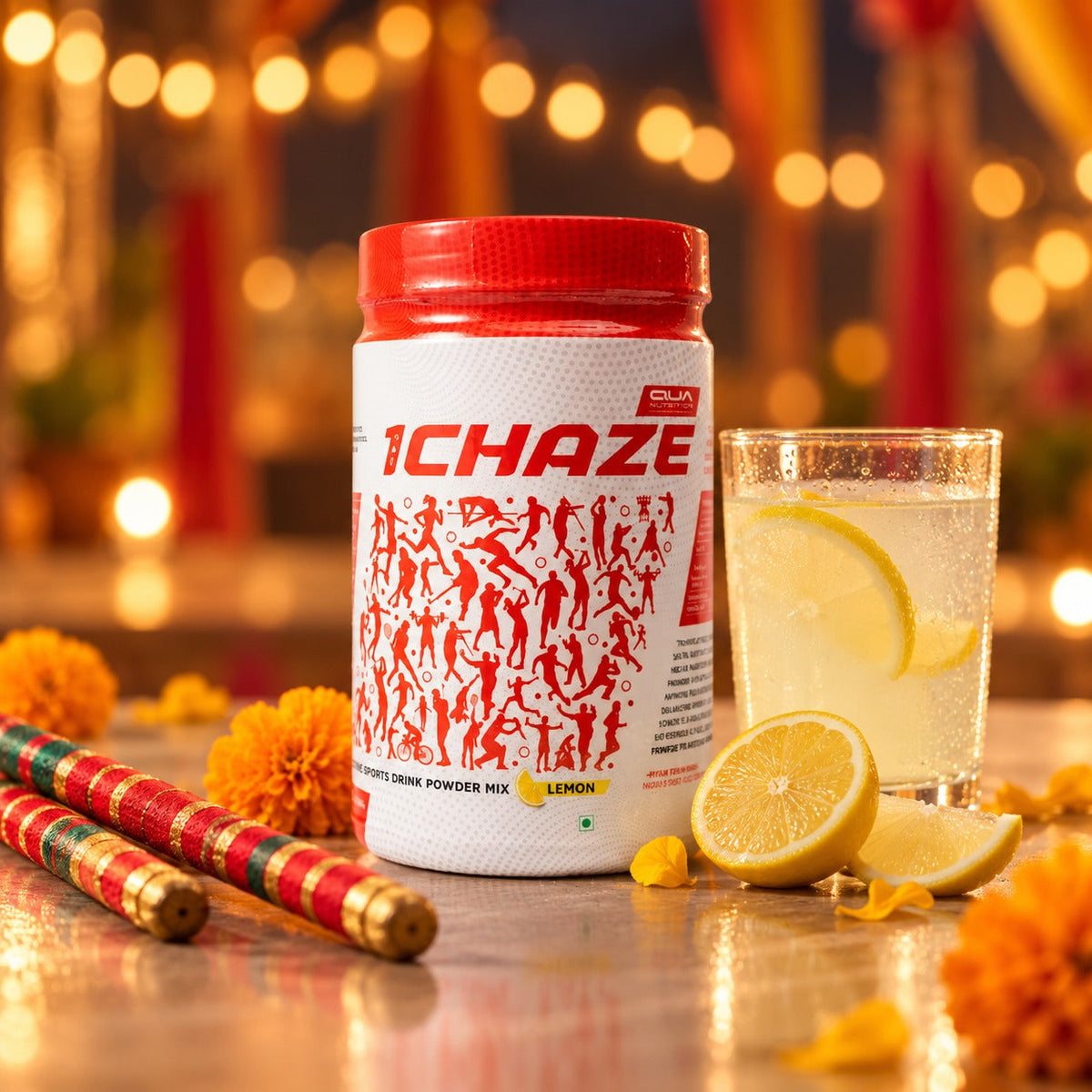
An isotonic drink has a concentration close to the body's own fluids, which helps it absorb quickly. The 1Chaze Isotonic Sports Drink is a powder made on that principle, built as a 6% isotonic solution. A few details make it relevant for a long festive night:
-
Electrolyte balance. It carries sodium and potassium in a 5:1 ratio, the two minerals most lost through sweat.
-
Three-part carbohydrate blend. Dextrose, maltodextrin and fructose give quick energy first and steadier fuel after, which suits a night that runs well past dinner.
-
Clean formulation. It has no added preservatives and uses a nature-identical flavour, so it tastes refreshing rather than syrupy.
-
Age guidance. It is suitable for anyone above 6 years, handy when the whole family heads to the same ground.
In practice, a bottle mixed at home and carried to the venue makes it easy to sip between rounds, the same way an athlete would. For nights out, the 30 g traveller pack is easy to slip into a small bag. The 750 g tub suits anyone who plans to use it across all nine days. The drink can be prepared ahead and kept for up to 2 hours.
Since it contains carbohydrates and sugars, it is worth checking the label against your own vrat rules. Some families treat fasting more strictly than others, and that decision is personal.
Navratri vrat hydration tips that fit into a busy day
A few simple Navratri vrat hydration tips separate coping from feeling good:
-
Front-load fluids. Drink more in the morning and early afternoon so the evening is not a catch-up exercise.
-
Pair salt with water. Sendha namak in chaas or lemon water helps the body keep what it drinks.
-
Eat water-rich foods. Cucumber, watermelon, papaya, oranges, lauki and tomatoes all count and are generally vrat-friendly.
-
Space out the tea. One or two cups is fine, ideally followed by a glass of water.
-
Do not skip the evening meal. A balanced vrat meal with paneer, curd or makhana supports energy for dancing.
Making the nine days easier
Navratri is best enjoyed when your body is not fighting you at every step. The easiest way to stay energized is by taking care of your fluid needs. Understanding how to stay hydrated during Navratri is a nuanced process that goes beyond just water. A lot depends on what time you hydrate yourself. Pairing it with the right meals, getting enough rest, and keeping a bottle of water with you at all times will see you through the long days and nights of Navratri.
FAQs
1. Why does Navratri fasting cause dehydration even when water is allowed?
A large portion of the water needed by the body each day comes from food, and the meals observed during vrat are both smaller in amount and drier. Salty snacks together with tea and coffee increase the amount of water lost, and electrolytes such as sodium and potassium may become depleted, so drinking only water might not be sufficient.
2. What are the best hydrating drinks to have during Navratri vrat?
Water, coconut water, chaas, nimbu pani mixed with sendha namak and infused water, is suitable for use during the day; for heavy garba nights, an isotonic drink like 1Chaze Isotonic Sports Drink can be used to replace fluids lost through sweating, as long as it conforms to your fasting rules.
3. How can I stay energetic for garba nights while fasting all day?
Keep drinking throughout the day, have a well-balanced vrat meal before going out, and while you're performing sip some electrolyte drink. Taking short breaks is also helpful.
4. Is coconut water good during Navratri fasting?
For most people, yes. It offers fluid, natural potassium and light sweetness. Those with kidney conditions or on medication that affects potassium should check with their doctor first.
5. What are signs that I am not drinking enough water while fasting?
Dark urine, dry mouth, headaches, dizziness, unusual tiredness and muscle cramps are common signals. Persistent or severe symptoms need medical attention.