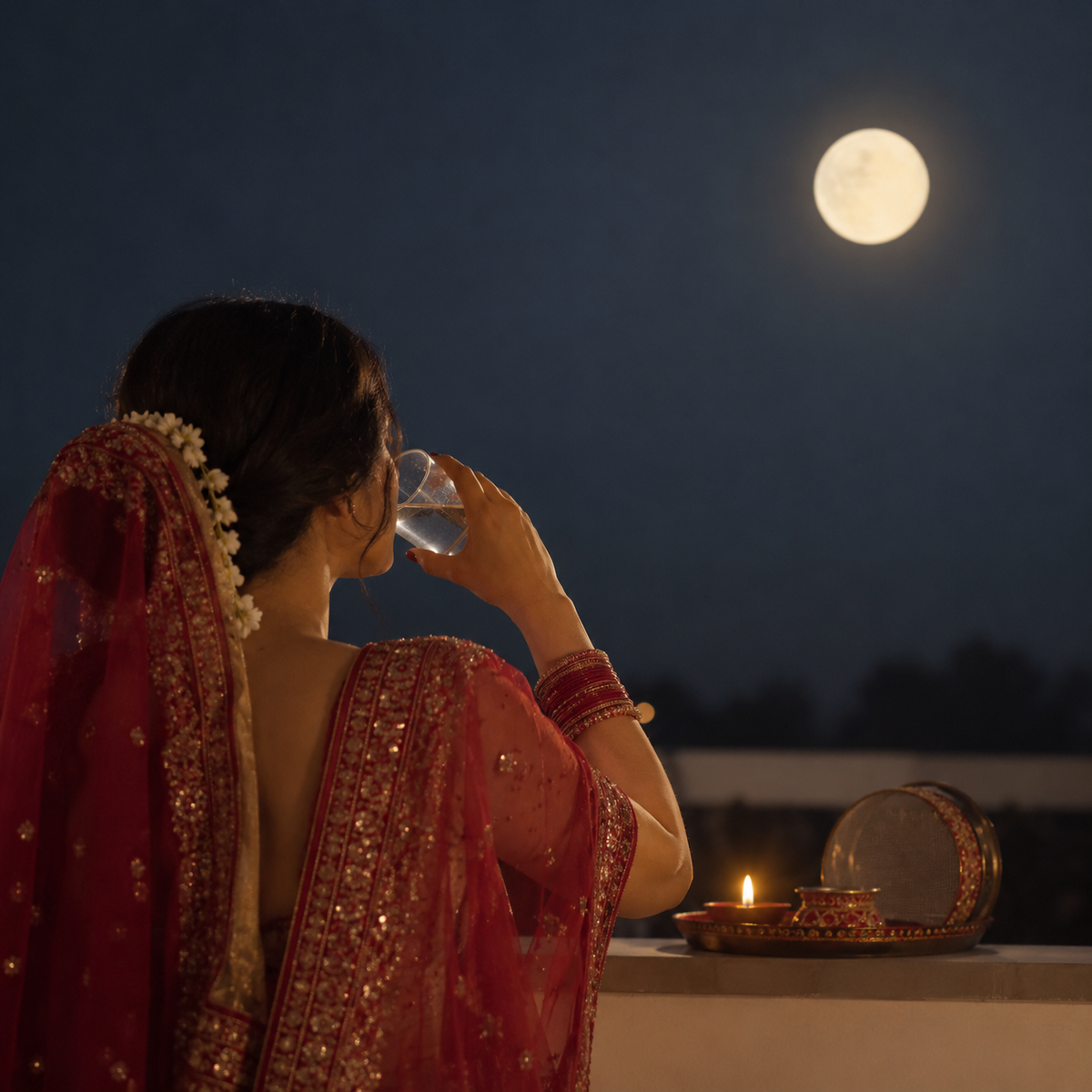
The moon shows and we lift the sieve and drink the first drop of water. The day begins before dawn. For millions of women, it ended without a drop of water after spending the day working, doing errands and performing rituals. It is a day of devotion and the body has been working silently through this.
Most people are not aware of what really happens in the first hour after the fast is broken. Many women grab a huge glass of cold water, a plate of fried food and a sweet and then wonder why they end up with a headache or nausea. A little planning around karwa chauth after fast hydration makes the evening far more comfortable.
What Happens to the Body During a Nirjala Fast
The fast is without water, and sometimes lasts 12-15 hours or longer, depending on the city and moonrise, and the body continues to lose water in the process of breathing, sweating, and urinating, with no water to replace it. In addition to water, it also leaches out small amounts of sodium and potassium, which are electrolytes important for the proper functioning of nerves, muscles, and the heart.
Blood sugar also drifts lower by evening, especially if the sargi meal was light or skipped. A body that is low on fluid, electrolytes, and fuel at the same time needs a gentle restart, not a sudden flood.
Symptoms of Dehydration After Fasting
Knowing the symptoms of dehydration after fasting helps in spotting trouble early. Common signs include:
-
A dry mouth, cracked lips, and intense thirst
-
Dark yellow urine, or very little of it
-
Headache or a feeling of heaviness in the head
-
Dizziness, especially when standing up quickly
-
Fatigue, weakness, or muscle cramps
-
Nausea or a bloated feeling after the first few sips
Mild symptoms usually settle with careful rehydration. Confusion, fainting, a racing heartbeat, or an inability to keep fluids down needs medical attention without delay.
How to Rehydrate After Karwa Chauth Fast: A Gradual Approach
The most useful rule is to go slow. After many hours without fluid, the stomach is empty and sensitive. Gulping a litre of water can cause bloating and nausea, and plain water alone does not replace the electrolytes that were lost.
Here is a simple way to approach how to rehydrate after karwa chauth fast without upsetting the stomach.
Step 1: Start with small sips. Traditionally the fast is broken with water offered after the moon puja. A few small sips of room-temperature water are enough to begin. Ice-cold water can shock an empty stomach, so it is better avoided at this stage.
Step 2: Wait a few minutes, then add electrolytes. After 10 to 15 minutes of sipping, a drink with some sodium, potassium, and a little natural sugar helps the body hold on to the fluid instead of passing it straight through.
Step 3: Take a light first bite. Once the initial thirst settles, a small portion of easily digested food prepares the stomach for the full meal.
Step 4: Continue steady hydration through the evening. Aim for regular sips across the next few hours rather than large amounts at once.
What to Drink After Karwa Chauth Fast
The question of what to drink after karwa chauth fast has more than one good answer. A few options work well:
-
Room-temperature water. The right starting point, taken slowly.
-
Coconut water. A natural source of potassium and a little sodium, and gentle on the stomach.
-
Diluted fruit juice or a thin lassi. These offer fluid with some natural sugar. Buttermilk (chaas) with a pinch of salt is also soothing.
-
Herbal tea or warm lemon water. Useful later in the evening, once the stomach has settled. On an empty stomach, very acidic or very strong drinks can cause discomfort.
-
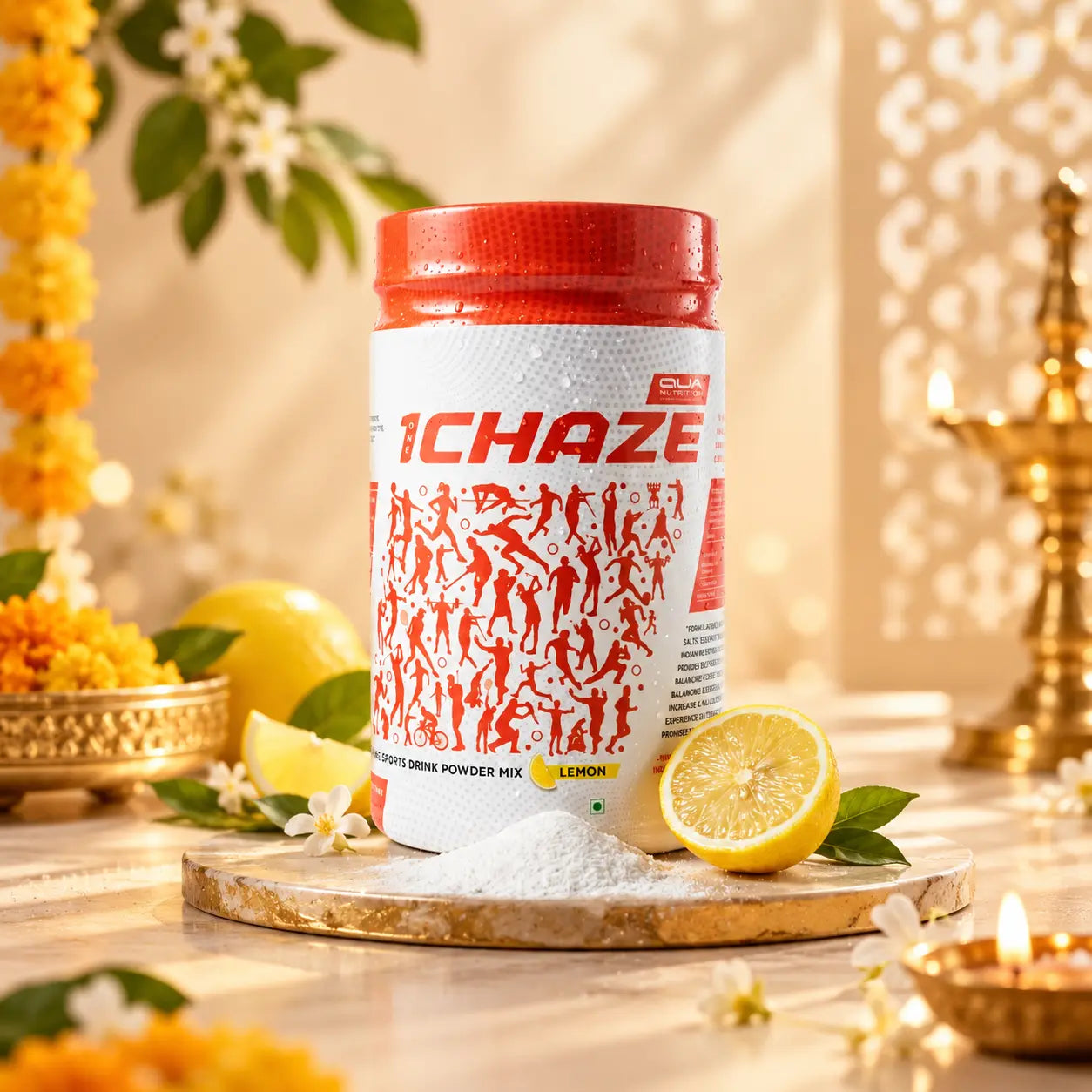
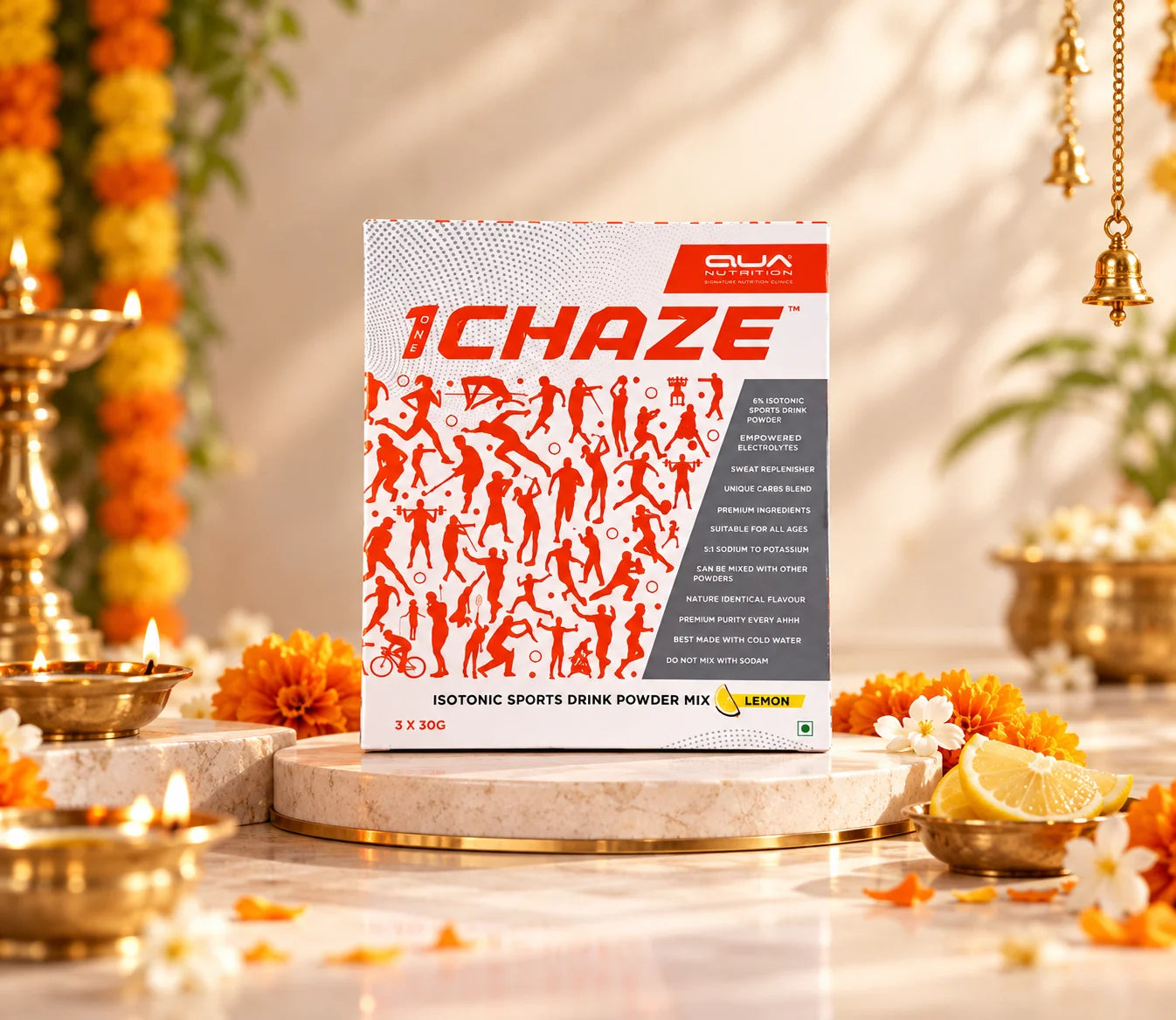
An isotonic drink. A well-balanced isotonic drink like 1Chaze Isotonic Sports Drink is designed to match the body’s own fluid concentration, so water, electrolytes, and carbohydrates are absorbed efficiently.
Many families also wonder about the best drinks to break karwa chauth fast in terms of tradition and comfort. Water first, followed by something light with electrolytes, tends to suit most people best.
Why the 1Chaze Isotonic Sports Drink Suits Post-Fast Recovery
After a long fast, the body needs three things together: fluid, electrolytes, and quick fuel. The 1Chaze Isotonic Sports Drink was formulated around exactly that combination.
-
A 6% isotonic solution. The drink is designed as a 6% isotonic sports solution, meaning its concentration is close to that of the body’s own fluids. This is the type of formulation made to support endurance and provide optimal hydration, because the body can take it in efficiently instead of leaving it sitting heavily in the stomach.
-
A balanced electrolyte profile. Sodium and potassium are the two minerals lost most during a fast, and they are present here in a 5:1 ratio. That balance supports muscle function and helps ease the cramping that often follows a long, dry day. For anyone who feels weak or shaky when the fast ends, this is the part that matters most.
-
A three-part carbohydrate blend. The formula combines pharma-grade dextrose, maltodextrin, and fructose. Dextrose offers a quick energy boost, while maltodextrin and fructose are absorbed at different rates, which supports steadier energy afterward. After hours of low blood sugar, that mix gives the body fuel without relying on a heavy sweet.
-
Easy to use. It is a hydration powder, so it simply gets mixed into water. There is no cooking or prep after a long day of puja and kitchen work. Sip it slowly after the first few sips of plain water, the same way any rehydration drink should be taken.
How Much Water to Drink After Breaking a Fast
People often ask how much water to drink after breaking a fast. There is no single number that suits everyone, since body size, weather, and activity levels differ. A practical guide is to take a few sips every 5 to 10 minutes at first, then build up to about 200 to 250 ml (roughly one glass) every 30 to 45 minutes across the evening.
A good sign of recovery is pale yellow urine, which usually returns within a few hours. If urine stays dark through the night, increasing fluids gently is a sensible next step.
What to Eat First After a 12 Hour Fast
The same slow approach applies to food. For anyone wondering what to eat first after a 12 hour fast, the answer is something light, soft, and easy to digest, not the heaviest item on the thali.
Good starters include:
-
A few dates or a small piece of fruit, which raise blood sugar gently
-
A bowl of moong dal soup or vegetable broth
-
A small serving of khichdi or plain rice with curd
-
Soaked almonds or a handful of nuts
Once the first small portion has settled, usually after 15 to 20 minutes, the rest of the dinner can follow in moderate portions.
Foods to Eat After Karwa Chauth Fast
When planning foods to eat after karwa chauth fast, the goal is balance: some carbohydrates for energy, some protein for steady blood sugar, and water-rich foods to support hydration. Helpful choices include:
-
Cucumber, watermelon, oranges, and other water-rich fruits
-
Curd, raita, and buttermilk
-
Dal, paneer, or sprouts for protein
-
Roti or rice in sensible portions
-
Cooked vegetables with light seasoning
Foods to Avoid Right After Breaking the Fast
Festive tables are often loaded with rich dishes, and the temptation after a day of fasting is understandable. Still, the stomach is at its most sensitive right now. It is wise to limit:
-
Deep-fried snacks such as pakoras, puris, and samosas
-
Very sugary sweets in large quantities
-
Heavy, creamy gravies
-
Strong tea or coffee on an empty stomach
-
Carbonated drinks, which can cause bloating
-
Very spicy food
None of these needs to be banned for the evening. Having them after the first light meal, in small portions, is far kinder to the body than starting with them.
Karwa Chauth Fasting Tips 2026 for Easier Hydration
A few karwa chauth fasting tips 2026 can make the next fast smoother, and they begin well before the moon rises:
-
Hydrate well the day before. Water, coconut water, and fruit through the previous day build a better starting reserve.
-
Make the sargi count. Include complex carbohydrates, protein, healthy fats, and water-rich fruits, and keep it low in salt and sugar.
-
Avoid caffeine before the fast. Tea and coffee increase fluid loss.
-
Rest in the afternoon. Cooking, shopping, and long walks in the heat speed up dehydration.
-
Keep an eye on the clock. Know the moonrise time for your city so there is no unnecessary waiting.
Women who are pregnant, breastfeeding, diabetic, or living with kidney, heart, or blood pressure conditions should speak with a doctor about whether and how to fast. Health always comes before ritual.
Frequently Asked Questions
1. What should I drink first after breaking Karwa Chauth fast?
A few small sips of room-temperature water are the best starting point. After 10 to 15 minutes, natural electrolyte drinks at home such as coconut water, buttermilk, or an isotonic drink can follow.
2. Is coconut water good for breaking a nirjala vrat ?
Yes, for most people. Coconut water offers fluid along with potassium and some sodium, and it is gentle on an empty stomach. As part of your nirjala vrat hydration tips, it is best to start with a few sips of plain water before drinking coconut water slowly.
3. How can I prevent dehydration during Karwa Chauth?
Drink plenty of fluids and eat water-rich foods the day before and at sargi, avoid caffeine and salty snacks before the fast, rest in the afternoon, and stay out of the heat as much as possible.
4. What are the symptoms of dehydration after fasting all day?
Dry mouth, intense thirst, dark urine, headache, dizziness, tiredness, muscle cramps, and nausea are the most common signs. Fainting, confusion, or a rapid heartbeat calls for medical help.
5. Can I drink water immediately after a 12 to 15 hour fast, or should I sip slowly?
Water can be taken right away, but slowly. Small sips every few minutes are easier on the stomach than large gulps and reduce the chance of bloating or nausea.
6. What foods should I avoid right after breaking the fast?
Fried snacks, very sugary sweets, heavy creamy gravies, spicy dishes, strong tea or coffee, and fizzy drinks are best left until after a light first meal.